
Freelance editor for ARJES GmbH
End-of-life vehicles consist of steel, aluminium, plastics, rubber and electrics. Before these materials can return to the circular economy, bodies must be opened up, components collapsed and composites separated – with clearly defined process steps and documentation that makes quality and costs predictable.
Low-speed twin-shaft shredders form the backbone of pre-shredding. They reduce bulky structures in a controlled way, create manageable piece sizes and prepare downstream sorting in a technically clean manner – the basis for marketable fractions.

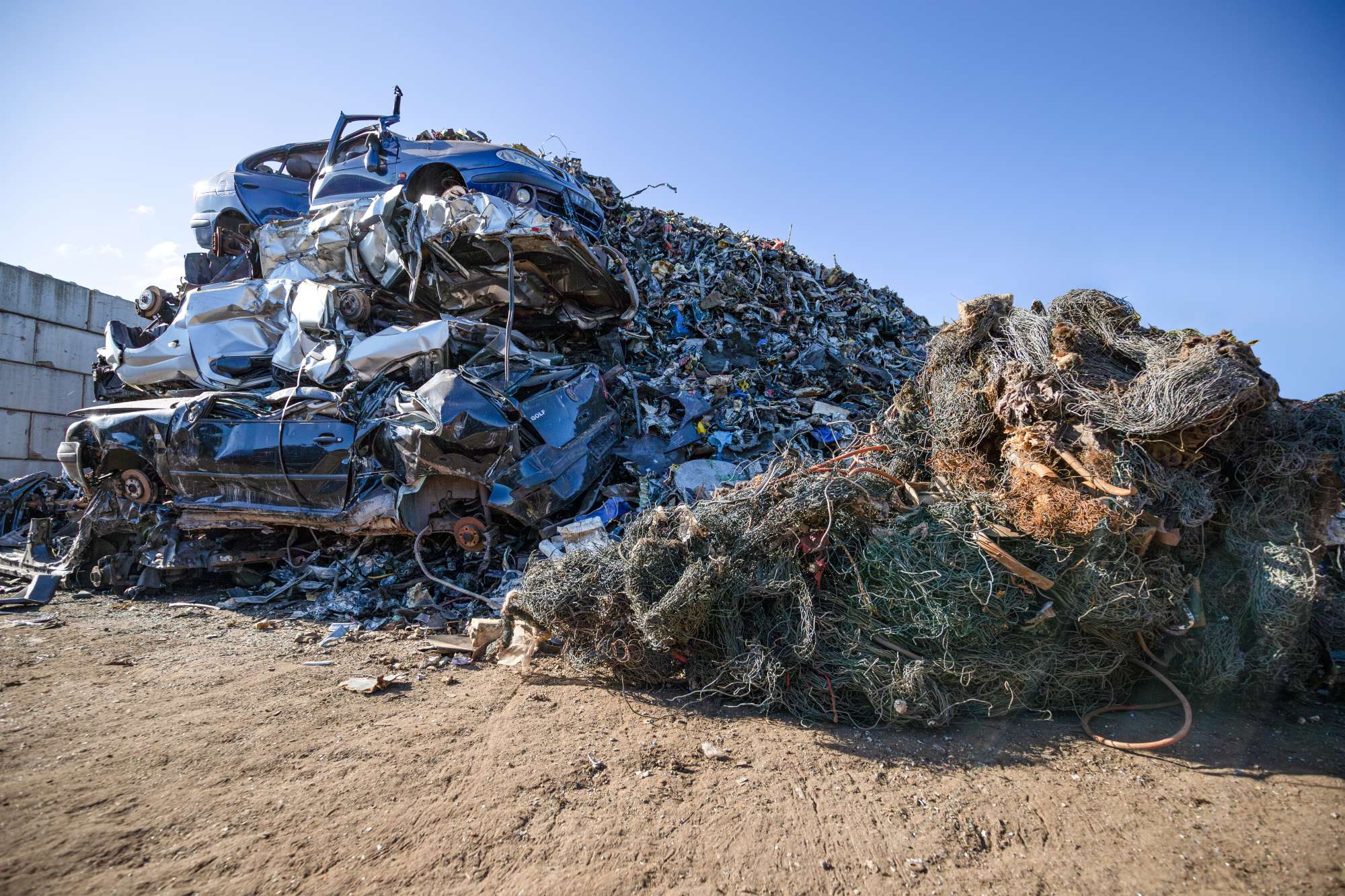
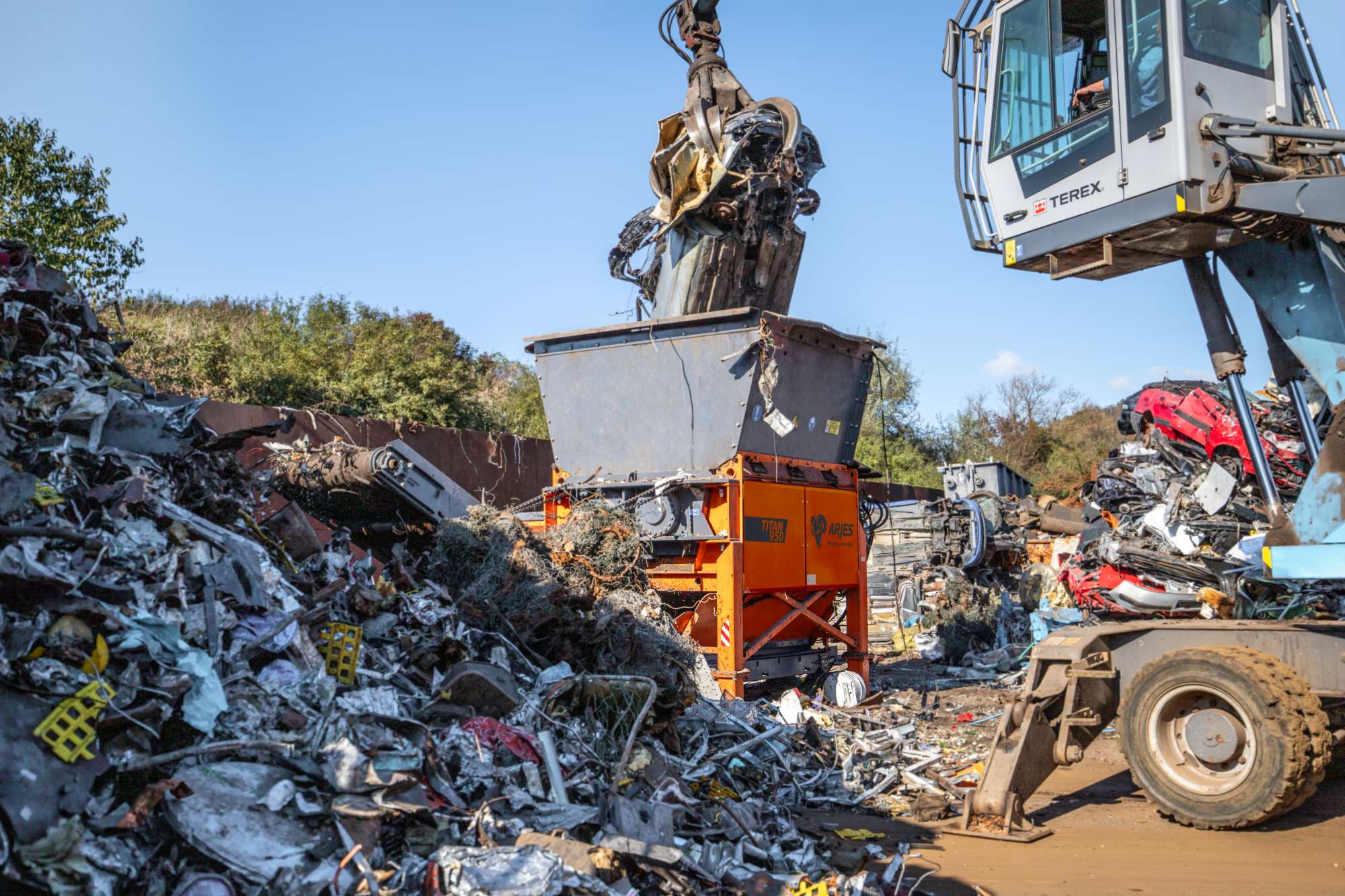

Vehicle shredders are industrial systems that convert end-of-life vehicles and vehicle scrap into sortable fractions. In practice, high-torque pre-shredders with gripping cutters tackle bodies, engine blocks, gearboxes and mixed scrap without time-consuming pre-dismantling. If required, a hammer mill follows for secondary shredding.
The twin-shaft technologies from ARJES and EuRec grip, tear and shear with counter-rotating shredding shafts. The asynchronous shaft configuration increases the bite on mixed and light scrap. If excessive pressure builds up on the tool shafts, the counter combs open automatically and release the material flow. This prevents blockages and noticeably reduces the load on the shredding unit. In addition, all shredders feature an automatic reversing function of the shredding shafts, which clears further blockages caused by contaminants. This creates well pre-shredded piece sizes for magnetic, eddy-current and sensor-based sorting units.
Before a body becomes a clean fraction, it goes through four steps that combine safety and quality targets.
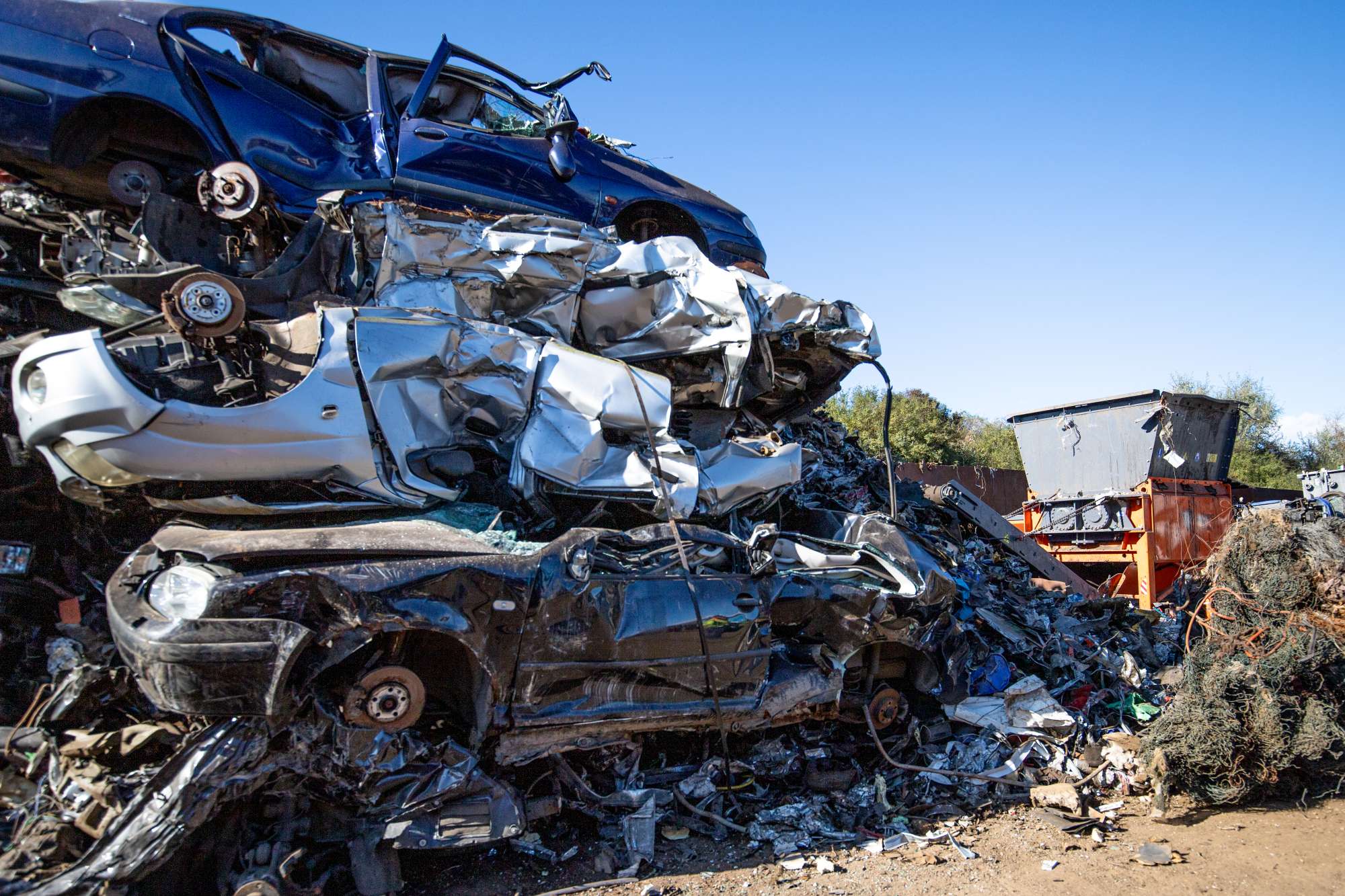
Afterwards, metallic fractions go into scrap recycling; tyre streams are processed in specialised lines for tyre recycling; electrical components and wiring harnesses flow into e-waste recycling. This closes the loop in car recycling.
Modern twin-shaft shredders are specified so they can be adapted to defined tasks and materials. What matters is tool geometry, shaft configuration and the interaction between drive power and torque. Properly tuned pre-shredding delivers consistent qualities for sorting, reduces energy and wear peaks and minimises unplanned downtime.
Modern vehicle shredders now combine powerful mechanics with smart machine control. Via the touch display, the rotational speed of the tool shafts and the belt speed can be precisely matched to the material being processed. Sensors continuously monitor operating conditions and provide exact fault messages. This keeps day-to-day operation simple, safe and intuitive even under tough conditions. An intelligently controlled fan system ensures constant motor cooling, reduces dust and noise emissions and keeps the drive in the optimal temperature range even under high load.
For efficient downstream processing, all ARJES twin-shaft shredders come with a magnetic separator integrated as standard. It separates ferrous from non-ferrous components directly after shredding. Steel-reinforced conveyor belts ensure tear-resistant discharge even for sharply shredded metal parts.
Wear-resistant cutters with an exceptionally hardened surface ensure long service life even with highly abrasive materials. If a change is still required, the ARJES quick-change system enables complete tool shafts to be replaced in a very short time – keeping downtime to a minimum.
For the drive, diesel or electric variants are available. With 405 kW in diesel operation and up to 500 kW in electric operation, models such as the TITAN 950 e-pu/d-pu deliver maximum shredding performance with optimal energy efficiency – tailored to site, application and environmental requirements.
Before shredding, binding safety and proof obligations apply along the entire line. The most important measures at a glance:
Those who implement these points consistently achieve robust legal certainty and strong occupational safety – from emptying to the documented handover to specialist waste contractors. Enclosure, extraction and effective filtration measurably reduce dust and emissions; inspection intervals keep limit values stable. Clean process control also increases fraction quality, simplifies marketing and reduces disposal costs for residual materials. For EVs, defined HV procedures, fire-safety logistics and trained staff are mandatory. This keeps the line predictable, compliant and economical even with fluctuating input.
New to the market and developed specifically for demanding applications with a high ferrous content, the EuRec FERRO 950 sets new standards in heavy-duty shredding. With almost 1,000 hp of drive power, a massively reinforced design and a high-pulling twin-shaft system, the currently probably most powerful shredder on the market processes extremely resistant material streams such as end-of-life vehicles and metal scrap, but also concrete rubble and railway sleepers with steel reinforcement.
An integrated magnetic drum separates ferrous and non-ferrous components and, compared to the classic overband magnet, is significantly more resistant because it does not rely on wear-prone rubber belts.
After the machine was first presented at bauma 2025 in Munich, it celebrated its official live premiere at RecyclingAKTIV 2025 in Karlsruhe. There, it impressed the trade-fair audience with the powerful shredding of complete car bodies into sortable fractions.
Vehicle shredders are the pace-setting building block between dismantling and sorting. If you design pre-shredding to be stable, you reduce downtime, improve qualities and increase revenues in marketing.
Twin-shaft shredders from ARJES and EuRec fit into mobile and stationary concepts – from campaign-ready solutions to lines with electric drive. What remains decisive is matching input, output and downstream sorting technology.


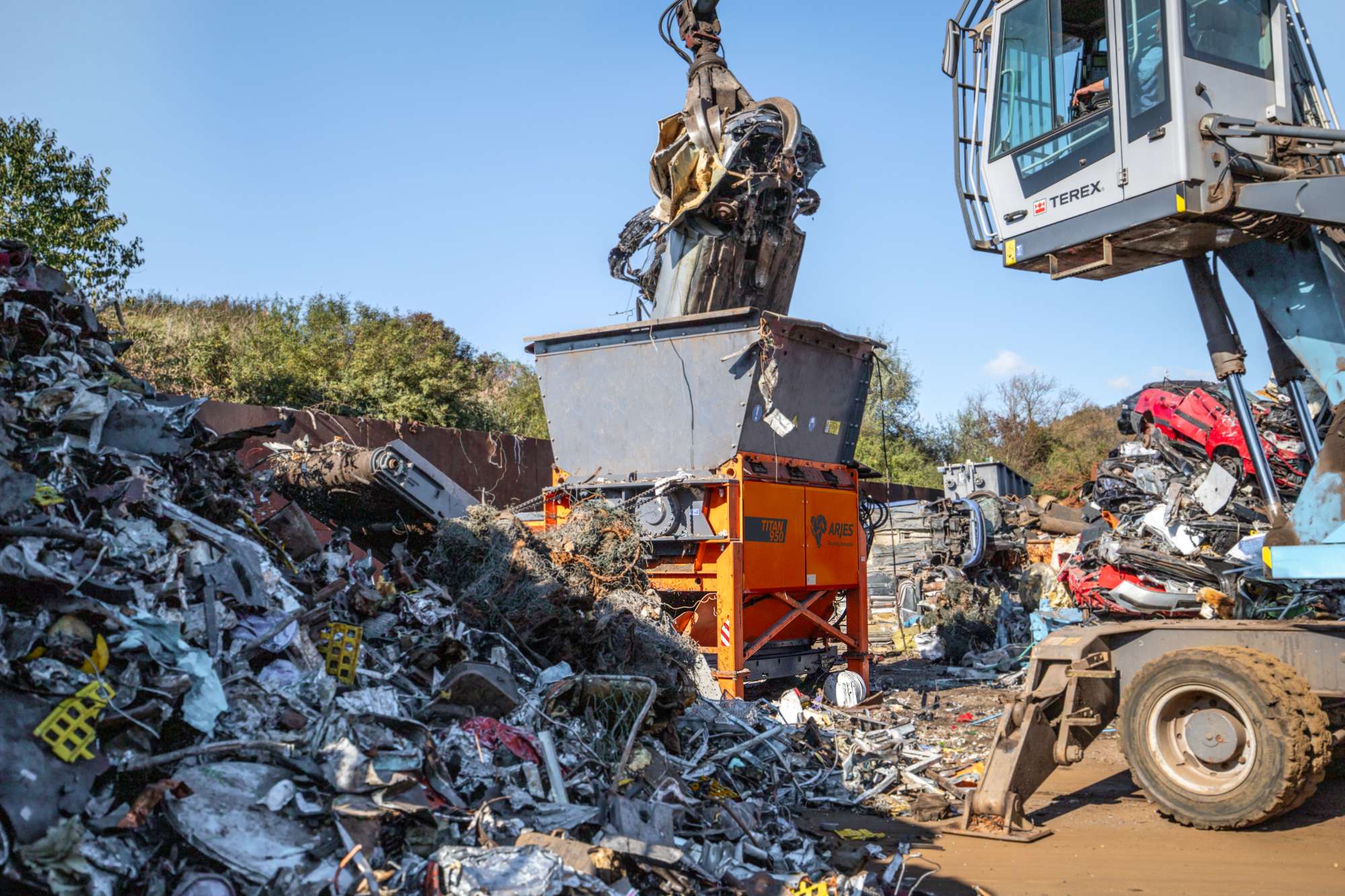
The following short answers bundle frequent practical questions and provide quick guidance on selection, operation and safety.
You need to load content from reCAPTCHA to submit the form. Please note that doing so will share data with third-party providers.
More Information


