
Freelance editor for ARJES GmbH
A retired family estate car rolls through the factory gate one last time. Car scrapping is the starting signal. Within a few hours, only sorted metal fractions, plastics and a sack of fine fluff remain. Vehicle recycling is a complex, highly developed multi‑stage process: it starts with legally compliant car scrapping – deregistration, Certificate of Destruction, collection – and leads via dismantling, pre‑shredding and sorting to high‑purity material recovery. A company like ARJES plays a central role here with size‑reduction solutions.

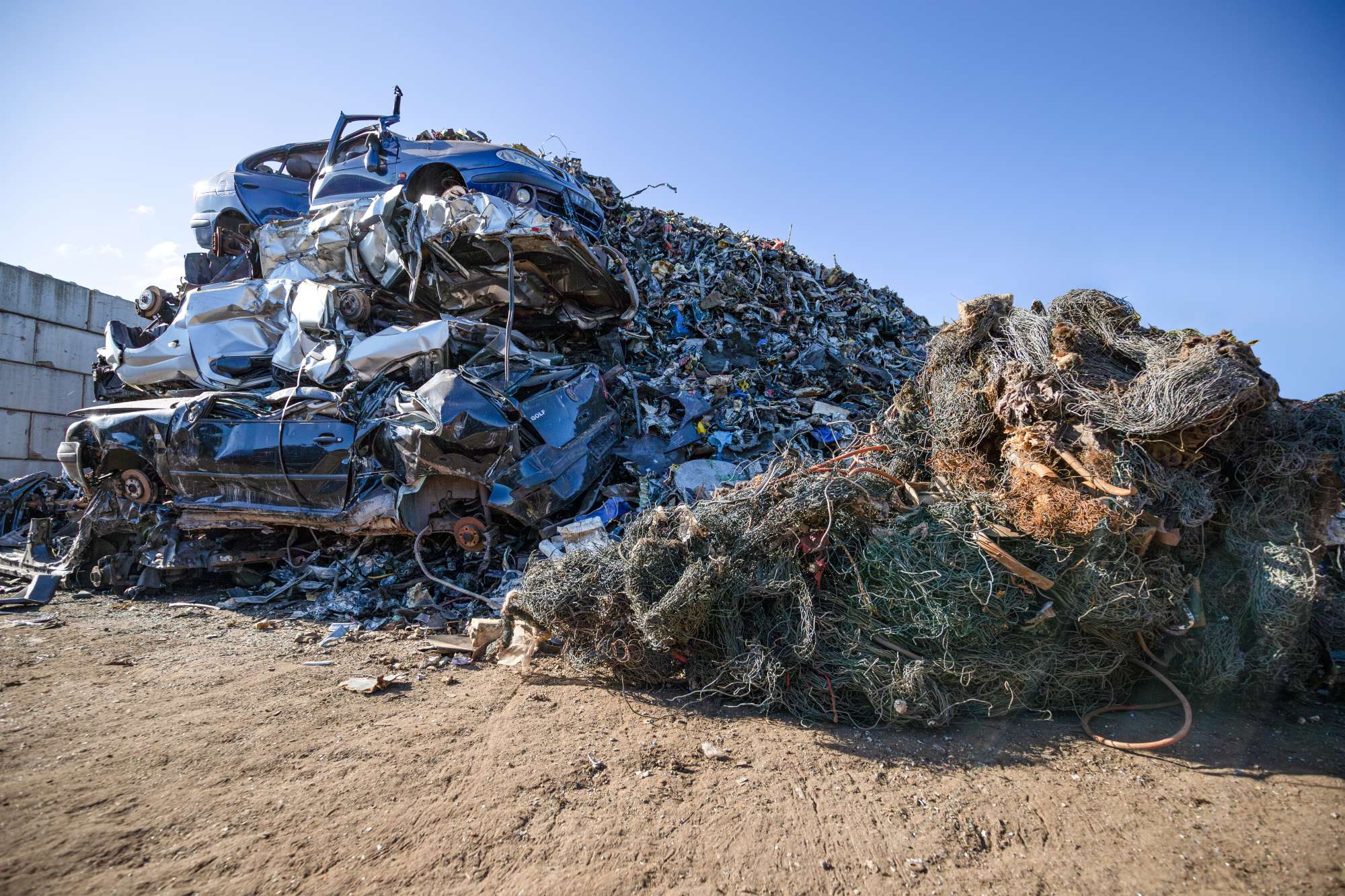
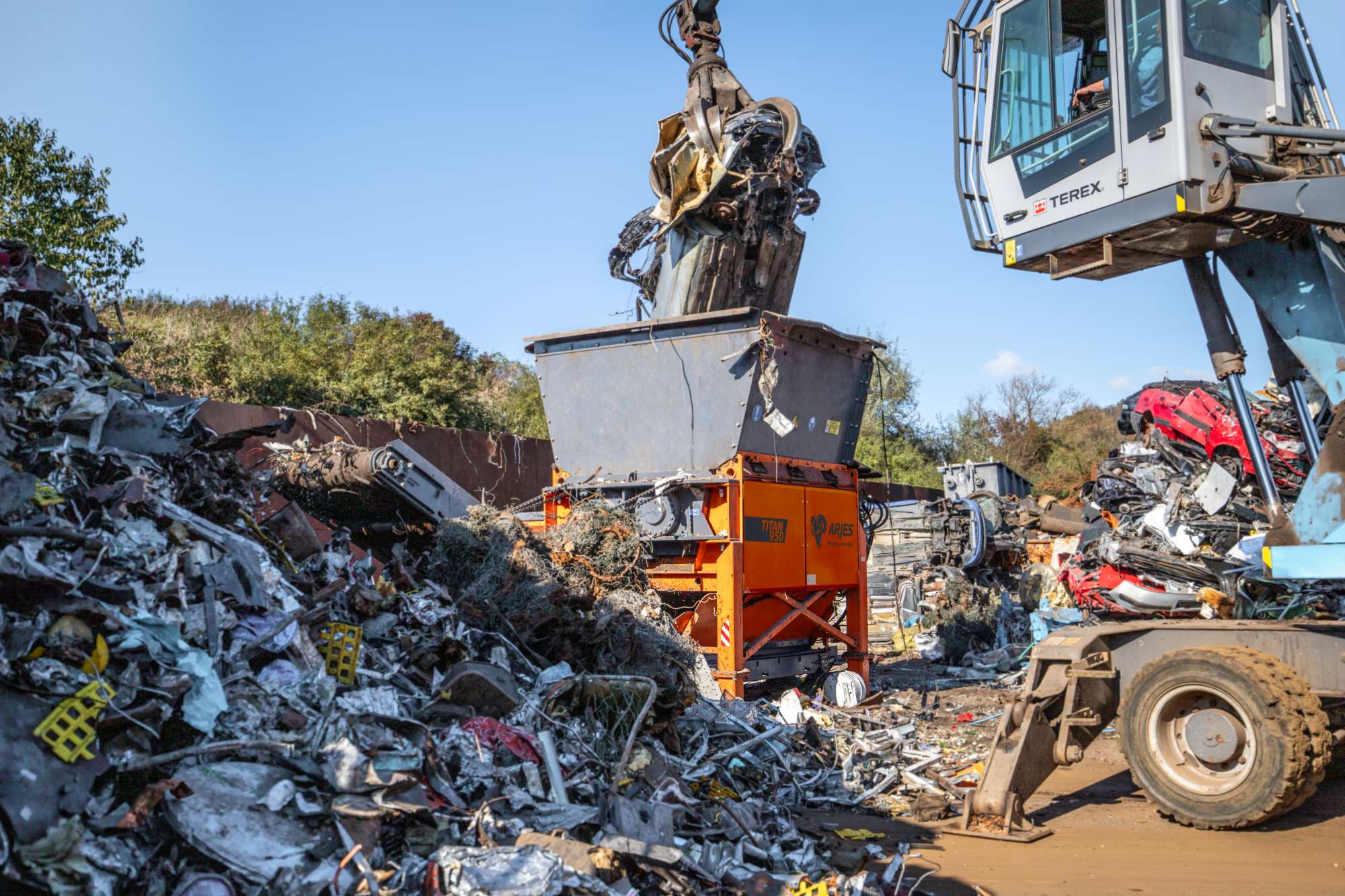

Commercial workshops and private mechanics often face the same issue: time pressure and hard‑to‑source spare parts. For older or specialised vehicle models, matching components are not always available locally – or only at high prices. As part of car scrapping, verified parts flows are created that can improve availability and price levels. Vehicle recycling helps by reconditioning reusable parts and offering them in a targeted way. This can reduce costs while also easing the environmental burden, as demand for new production falls and valuable resources stay in the loop. Car scrapping creates clear steps from deregistration to the handover to the authorised dismantler.
After car scrapping and dismantling, different treatment routes can be combined – depending on site conditions and permits – to lower landfill rates while achieving both economic and ecological benefits:
If the entire annual ASR volume were packed into freight containers, it would form a cargo train stretching from Frankfurt to Barcelona.
Before a rusty estate car becomes clean fractions, it moves through four tightly timed stages:
This turns a seemingly worthless shell into a sought‑after bundle of secondary raw materials for steelworks and plastics processors. Metal fractions form the backbone of scrap recycling; tyre streams run in parallel via tire recycling. Where lightweight composites appear in the input mix, dedicated routes such as CFRP/GFRP recycling can support recovery.
At the start, operating fluids, airbags, pyrotechnic devices and – for electric vehicles – high‑voltage batteries are removed. End‑of‑life tyres are also recorded separately and fed into dedicated tire recycling processes to recover rubber and steel content.
Overview of typical substances:
Components such as engines, gearboxes or catalytic converters can achieve attractive margins on the used‑parts market. Metal parts that cannot be reused go directly into scrap recovery streams; electrical components and wiring harnesses are routed into specialised recovery streams. Dismantling is a core step within car scrapping.
Average prices for used vehicle components:
Up to 30% of an end‑of‑life vehicle’s total value creation comes from resold spare parts. Every reused unit avoids new production – a direct contribution to the CO₂ balance.
After dismantling, the physical break‑up of the vehicle begins. In car scrapping, pre‑shredding is the technical pivot between dismantling and sorting. In the pre‑shredder, bodies, engine blocks and axles are broken down so that downstream separation processes are prepared optimally. Modern twin‑shaft systems work with asynchronously running shafts and specially shaped tools to cut even tough body structures efficiently. Average throughput rates, depending on the material, are 30–40 tonnes per hour, with a target size below 300 mm. Sensors monitor torque and tool condition to avoid downtime.
For this step, ARJES relies on the mobile TITAN 950 and the stationary TITAN 950 e-pu / d-pu. Newly on the market and designed specifically for demanding applications with high ferrous content is the twin‑shaft shredder EuRec FERRO 950. With reinforced design, a powerful shredding system and an integrated magnetic drum for separating ferrous and non‑ferrous components, it is suitable for extremely resistant material streams such as end‑of‑life vehicles and scrap metal.
After shredding, the precise separation work starts. Car scrapping has already removed hazardous materials and thus creates the basis for stable sorting. The goal is clean output per fraction so that marketing and downstream processing run smoothly. Sequence, final grain sizes and belt speeds decide yield and quality; aggregates are often arranged in cascades. Only when ferrous, non‑ferrous metals and light fractions run steadily does fine‑tuning of the remaining streams pay off.
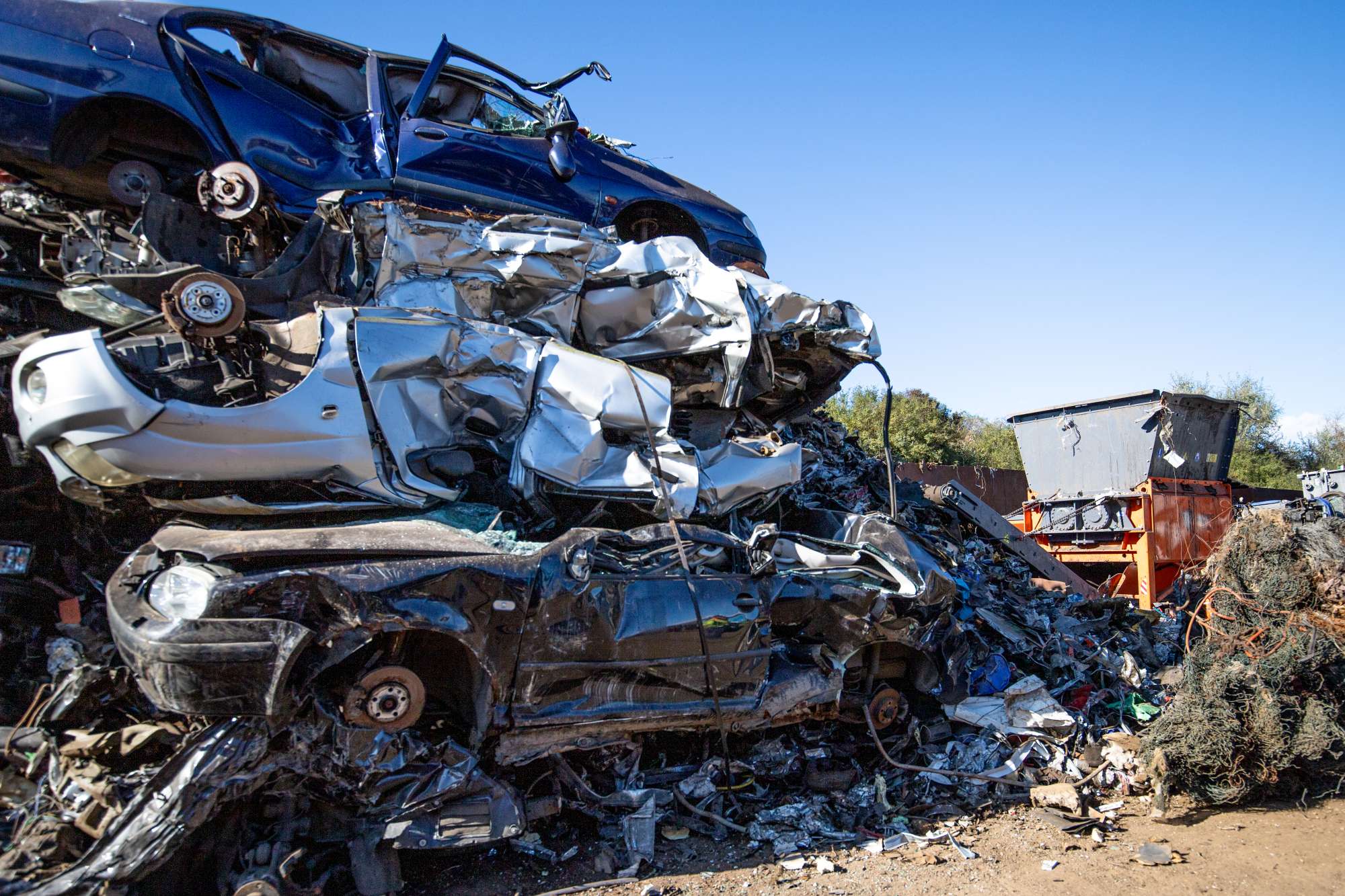
Separation methods at a glance:
Results are continuously verified via mass balances and laboratory samples. This keeps quality stable and builds confidence with buyers. At the same time, disposal costs fall because fewer mixed residues remain.
Car scrapping describes the legally compliant handover of a vehicle to an authorised dismantling facility, including deregistration and documentation. The aim is a predictable process with clear records and the shortest possible routes into recycling.
At a glance:
The following three subsections explain the key steps of car disposal in detail.
For compliant car scrapping, registration documents (where applicable) are required; the Certificate of Destruction is issued by an authorised dismantling facility. Using this certificate, deregistration is completed; number plates can be invalidated and the vehicle can be removed from the register.
Many operators provide regional collection as part of a car scrapping service. The vehicle is handed over with free access; keys and documents are provided. Operating fluids, airbags and batteries are removed at the facility; accessories and personal items are removed in advance. Car scrapping includes a traceable handover with confirmed collection.
Whether a disposal fee applies or a payout is possible depends on residual value. Condition, completeness, common components and metal prices have an impact. Vehicles with high parts re‑use potential are more likely to generate proceeds; heavily stripped or damaged vehicles are more likely to generate costs. Transparent car scrapping with documented material flows improves calculation. In practice, car scrap yards often base offers on current scrap values and part demand, which directly influences car scrapping value.
The growing share of electric vehicles adds safety steps to car scrapping. High‑voltage batteries are removed before shredding and stored in fire‑protection containers. The EU is discussing minimum shares for secondary lithium, nickel and cobalt in new vehicles – an additional business field for recyclers. Power electronics and cable harnesses are transferred into dedicated recovery streams to reclaim valuable metals and plastics. These steps are an integral part of responsible car scrapping.
A 75 kWh lithium battery contains material worth around €3,000 if all metals are recovered.
The planned End‑of‑Life Vehicles (ELV) regulation raises targets for recycled plastics for the first time in a binding way (expected 25% in vehicle interiors from 2030) and reviews higher quotas for steel and aluminium. Investing in post‑shredder technology today secures future market share – and improves both car scrapping and vehicle‑recycling processes.
From a policy perspective, car take back schemes and digital traceability of spare parts are moving further into the spotlight – a car scrapping policy shift that affects the entire sector.
From 2027, type approvals are expected to be granted only if spare parts can be digitally traced – this affects, according to EU estimates, more than 30,000 spare‑part numbers per model.
Vehicle recycling has long been high‑tech. With robust pre‑shredders from ARJES and EuRec as well as additional systems, recycling rates can be achieved today that are close to the 95% mark. The upcoming EU requirements and the boom in e‑mobility increase pressure, while also opening new material and service markets.
Thus, vehicle recycling is not only a technical process, but also an investment in sustainability and economic viability (similar to paper production). It offers tangible benefits for vehicle owners who access affordable spare parts, for workshops that can react flexibly and quickly, and for the planet, because existing resources are conserved and raw‑material loops are closed. Legally compliant car scrapping is the starting point: deregistration, Certificate of Destruction and planned collection link together and lead directly into dismantling and shredding. This reduces idle time, keeps disposal costs controllable and makes additional revenue from secondary parts more likely.
You need to load content from reCAPTCHA to submit the form. Please note that doing so will share data with third-party providers.
More Information


